Saturday, May 14, 2011

Lessons I learned from my mom.

Picture adapted from "Everything's Coming Up Sock Monkeys!" by Bonnie Kraus Connelly

http://www.amazon.com/Everythings-Coming-Up-Sock-Monkeys/dp/097903230X/ref=sr_1_1?ie=UTF8&s=books&qid=1305371031&sr=8-1


Here are a few edited comments from the tribute I gave at my mom's memorial service yesterday. Mom was in failing health for some time and her passing, although a sorrow to us, is also a rejoicing as she has no more pain.


My mom taught me that life is better if you don’t take it too seriously. She would not want us sitting around mourning. She’d want us laughing.

When I was younger, my mother took me for a weekly violin lesson. Now many of you know that Mildred was always on time. I wasn’t. And she would be in her big green Buick, behind the wheel in the garage waiting for me. She’d wait until I was in the garage, right in front of the car when she’d lay on the horn.
She faithfully wrote her children letters while we were away at school. Before email, when people actually did this. They weren’t profound, but newsy, just making a connection with the twins and me. And at the bottom, she’d adjust the size of her handwriting to fill in the space. Am running out of room now so must close. Small if there wasn’t much room. Or big if she needed to fill up the page.

My mom taught me how to cuss. And not Baptist cussing like gosh, darn or even gee whiz. We weren’t allowed to say those words because they were too close to real cussing. Now, for mom it was, Deed! Or if things were worse, Deed and double! Oh my stars! Or if things were even worse, “oh my stars and garters!” (What does that even mean?) Growing up, I didn’t know who Pete was, but if Mom invoked his name, I knew I’d done something pretty stupid. Oh for Pete’s sake! Most good mothers have a comment specifically to make their children feel guilty for when their stupidity was particularly epic. Christian mothers design these comments to be carried on into the child’s adult life. Mildred’s was remarkably effective in this regard and I still hear her voice when I’m being stupid. “Oh for pity sake or just oh for pity!”

She taught me not to put on airs. She was never one who sought to impress others with social standing or clothing. This carried over into the time she served as a missionary both in Africa and in Albania. She refused to let anyone put her on a pedestal as a missionary. In fact, she never got very spiritual about her calling to go. I remember at a commissioning service before she and pop left for a year in Kenya when she was asked about why she would want to go and serve. Here was her chance to let everyone know of her answer to the great commission or her great calling. Instead, she simply said, I’ve always wanted to be a return missionary and I guess going is the only way to accomplish that.

Mom taught me that the day goes better if you have a secret stash of Three Musketeers candy bars. And in her last months when I knew she didn’t have long and didn’t have an appetite, when I’d help feed her, we pretty much just concentrated on the dessert.

Mildred taught me that the only kind of acceptable snake was a dead snake. I remember my mother watching over us as we swam in the Warwick River. Now, my mother couldn’t swim but she wasn’t there to rescue the kids if they were in trouble. No, she was there, shotgun by her side to kill the snakes. There were always extra kids there. I can’t really imagine what the other parents thought. The only adult watching the children in the river can’t swim. But don’t worry, Mildred’s got a gun.

My mother taught me that the Bible could be read and understood without a seminary education. She had a high school education. She had the audacity to believe that if the Bible said “Do not be anxious,” well then, it must be an affront to a loving God if she walked around in a careful state. She considered worry a sin, and therefore it was a foe that, like a snake, should be vanquished. Once she learned this principle in mid life and started to practice it, she acted like a woman who wasn’t about to be pushed around by a spiritual enemy. And she wasn’t above invoking the name of Jesus out loud to put the devil in his place. I can just imagine the devil’s reaction to hearing my mother was out of bed in the morning. “Crap, Mildred’s up. She’s got a gun.”
Oh for pity sake. I hear ya Mom…cussing in church…but they weren’t my words, I was quoting the devil’s vocabulary.

My mother taught me about contentment. Mom turned everything into a song. Growing up, if we were out of dessert except for applesauce, she made up a goofy song about it. Even in her waning months when she was frequented by pain, she often started grunting or gasping with a pain but quickly turned it into a song so that it would go something like this Oh, Oh, Oh, Oh to be like thee, oh to be like thee. The pain was forgotten, replaced by a melody. Later, when she’d forgotten most of her favorite hymns, she still remembered children’s songs, so she would cry, Oh dear. Oh dear. And soon her pain would find a melody. Oh dear what can the matter be?

In fact, even in her final weeks when she was confined to a wheelchair, unable to walk, on oxygen, non-healing leg wound because of poor blood flow, I said to her, “You never complain.” She looked at me from her wheelchair, oxygen tubing in her nose and she said, incredulous at my comment, “Well, I don’t have anything to complain about!”

My mother taught me about facing tragedy. Many of you know that Mom’s life wasn’t without its sorrow. After having four miscarriages, her doctors told her she was unable to have more children. But then she lost two sons to a river drowning before I was born. Later, she miraculously had twin girls and then me. But how did she respond? With fear and avoidance? No, she responded by facing a threat head on, equipping us, getting my sisters and I into swimming lessons from an early age. And then she moved us down to the river so we could grow up swimming.

She wrote down a few things she wanted spoken at her memorial service and I was reviewing them this week. She wrote this on the bottom of the page. “I’m expecting that I will see all of you again soon in your perfected eternal life. Please, don’t any of you disappoint me! See you soon!”

Well, I’m running out of room now, so must close.


Tuesday, April 19, 2011

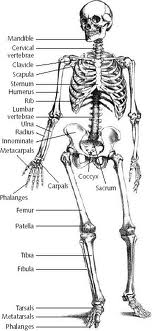
Have Skeleton; need muscle.


I'm in the initial stages of a new novel. I call it the skeleton stage.

I start with a central idea that will carry the meat of the project. The first idea comes with a protagonist, someone who I am determined to get into a lot of trouble before everything is done.

The skeleton stage is all about research. I need to elaborate on the central conflict adding muscle (sub-plots, characters, troubled backstory and layers) that will give my story movement.

Then I'll need organs, the major plot points that will get my protagonist through the chief conflict, arriving at the end with some definite growth as a result of dealing with the conflict.

I need skin and connective tissue to bring it all together in a way that won't seem choppy and disconnected. It has to look real enough so that readers won't think, "that would never happen."

At this stage, I have an open folder called "Novel 15." Inside, I have documents that are nothing but a jumble of ideas. I'm searching for the reasons for my characters to act like I need them to act. I'm learning to know my characters at this stage. Some days, it feel like a bag of loose bones. I've got a tibia, a set of ribs, some vertebra, a mandible, a femur and a humerus.

Now I need to fit them together.

The more work I do now, the better and faster the result later. The problem is, when the word-count on the novel isn't piling up, there is a sense that nothing is getting done. That's not really true; but it's a feeling I need to fight.

I'll be happily writing away soon enough, heading down that road until I reach a final step and pull out the paddles on the defibrillator to see if I can shock this monster into life!

Enjoy the process, folks. Whatever you are working on, I'm pretty sure there is a "skeleton stage." Do the foundation work right and you will see the good results later on.

Here's to the bones!

Harry

Saturday, April 2, 2011

Writing From the Heart


Someone a lot smarter than me once said that we write non-fiction to convey information; we write fiction to elicit emotion. I’d like to suggest that the best non-fiction does both: it conveys information by stimulating an emotional response.
So look back over the last scene you’ve written in your work in progress. Forget all the little pearls you’ve been taught about limiting attributions, killing those pesky adverbs, and avoiding repetitive words. Resist the urge to line edit. Just ask yourself one question: How did it make you feel?
Did it make you angry? Good.
Fear? Very good.
Love? Hate? Excellent.
In a novel that may involve hundreds of pages and dozens of scenes, ask yourself whether it deepened your emotional response on any level. Did it make you love more? Deepen your anger? Ratchet up your fear?
If you don’t feel something or feel something more, toss it out! The reader whose emotions aren’t involved is a reader who is going to skim ahead looking for a bit of tension that will grip him or her at a heart level.
Writing that is made up of beautiful sentences, graced with metaphor and simile, but doesn’t make me feel something is unlikely to impact me for a minute beyond the time I devoted to the reading. Words that anger me, touch a chord of fear, or make me love or hate are words which will be remembered!
Mark Twain said, “No tears the writer; no tears the reader.”
So this can become our judge: as you are writing, what are you feeling?
I remember a few years ago, I was working on a novel. I had gotten my hero into all sorts of trouble: false accusations, loss of job, threatened career and relationships, all the cards stacked against this guy. Finally, late in the novel, he comes to faith. I was setting in my favorite chair, writing the conversion scene, and as I wrote, tears spilled onto my cheeks. My wife walked by, pausing to look at me and question, “Are you OK?”
I nodded. “Seth just came to Christ.”
Ridiculous?
Hardly. If I didn’t care about the outcome for my protagonist, if I wasn’t ßemotionally tangled in the climax, neither would my reader! Don’t let your friends convince you that just because your characters are imaginary, they don’t matter. They deserve your emotional investment. In fact, if you don’t invest emotionally in them, your readers won’t either.
So forget all the other writing pearls for a minute and reread your last paragraph. Are you touched at a heart level?
I hope so. If not, you risk creating a page of information that your reader will grow impatient with, turning ahead until something strikes them in the heart.
As we reach out to non-Christians around us, we can take this information to another level. Although we carry the great truth of the gospel, unless you wrap it in emotion, your friends will likely keep searching. I wish I knew who said this because it’s so true: they will not care what you know unless they know that you care!
Emotion (love, joy, hate, anger, fear) is what makes a message stick!
We have been told (quite incorrectly) that truth is the engine, faith is the coal car and feelings are the caboose, obviously not reliable and certainly not to be trusted. That’s craziness! The God who asked us to love him with all our minds asks us also to love him with all our souls.
That subject is way bigger than I can address here. For now, give this simple test to your latest writing and see if it will pass. How does it make you feel?

Monday, February 28, 2011

My favorite teachers.

It was in the late 1990s when I had a humbling conversation with one of my writing heros, Frank Peretti. As an author publishing with the same publishing house (Crossway Books), Frank had been gracious with his time and critiqued a manuscript for me. I remember one of his comments like it was yesterday.

"You're breaking the rules, Harry."
I leaned forward. "What rules?"
He smiled. "Don't be afraid to read what the fiction teachers are saying."
When I questioned him further, he gave me an example of how I had broken a point-of-view rule in a scene I had written. Now realize, at that point in time, I had been blessed by having four novels published and had a contract in hand to write a fifth one (that I hadn't yet started). But until that time, I had only written by natural gifting and had never opened a book to instruct me on how this whole fiction world worked, and what the "rules" were (essentially what works and doesn't distract the reader). So I went to work and started reading book after book on how to do what I'd already been doing for years. The result? I had to fight being "gun-shy." As I read "the rules," I found myself worrying. Can I do this?
Of course, that was a silly worry, but when you write without knowing all the rules, you don't really have a basis for worrying if you are doing it correctly!
I think my early success slowed my maturation as a writer. Now, my writing is much tighter, and hopefully I've learned a few tips about conflict, suspense, pacing, and tension along the way. I've been able to polish my dialogue and edit more efficiently.
Now, people often ask me, "who are your favorite fiction teachers?"
I have a few I pay attention to. Here are my favorites: Donald Maass. He has a series of books including the one I pictured above about writing the breakout novel. Read all you can find from Sol Stein and James Scott Bell and even a guy named James Frey (although his books How to Write a Damn Good Novel I and II prompted my then 12 year old to put masking tape over the spine of the book and substitute the word "Very" for "Damn.") OK, so I'm glad my son didn't like the title, but I loved the advice.
Who are your favorite teachers?
Harry

Monday, February 14, 2011

Characters that Resonate

If you've ever been to music store you've likely seen rooms with dozens of guitars hanging along the walls for display. I love stores like that. A few years ago I bought my dream guitar, a Taylor made of koa wood.

If you stand in a quiet room with guitars all around you and strum a chord on just one of the instruments, something interesting will happen. The strings of the guitars around you will begin to vibrate. In fact, I've been told that if I wanted my guitar's wood to age (guitars often sound sweeter as the wood gets older...hopefully like experienced authors, huh?) that I should leave the guitar out on a stand instead of always stored away in a case so that the guitar would be exposed to sounds in the room. The strings will vibrate as a result of being exposed to other music.
This is called resonance. It's an important part of fiction, too. What causes readers to remember a story long after the last page? I think it has to do with resonance. Something about the character or their experience or their emotional response to a conflict strikes a chord within the reader and they find themselves nodding their heads in agreement.
It isn't as simple as fashioning a character who acts, looks or thinks just like your readers. No one wants to read about characters who are just like themselves. Protagonists have to in some way be bigger than life. Readers want to read about characters that they wish they were.
But a character can't have qualities that are out of reach. They have to be admirable, but also human. That raises sympathy for the character, something that is necessary if your readers are going to stick with you for the length of a novel.
This also works in life. We all carry our personal stories and we should be sharing them with others. But sometimes we fear that our experiences are unique, different, or weird and that others won't relate to them. Opening up to others about our humanness can be scary, but is almost always freedom-producing. In reality, most of our stories will find resonance with others and will serve to bind us to them in ways that conversations about the weather can never accomplish.
I'm always on the look for qualities in my characters that will find resonance in my readers. And along the way, I need to share my personal stories with those God puts in my path. When I pluck my guitar, other guitars around me start to vibrate.
Just think about it.
Grace,
Harry

Thursday, December 9, 2010

The Blind Men and the Elephant


Today, our post-modern, post-Christian culture rejects the Christian's claim that Jesus is the only way to the God and they loudly disdain our views as narrow and exclusive. They argue, "All religions give us insight into some aspect of God. There are many paths, but all eventually lead to heaven."


To illustrate this, the story of the blind men examining an elephant is often given. Remember the story? One blind man felt the side of the elephant and proclaimed it like a wall; another examined the tail and said it was like a rope, another the trunk, who said it was like a pipe. On and on they describe inadequate and limited views of the elephant. They try to make the point that all are correct and that they each reveal some critical truth. The jump is then made to world religions with the claim that all religions teach us some truth about God.

I was listening to Tim Keller, author and pastor of Redeemer Presbyterian church, speak on this topic of Christianity's exclusive claim. He makes some great points and I am stealing his words here. He references Leslie Newbigin (also an author, a bishop and missionary from the Church of Scotland) who points out that the real point of the story is constantly overlooked: The story cannot be told except by someone who can see the whole, otherwise you don't know the men are blind. The only way you can say other religions contain partial truths if you see the whole elephant and if you claim that all religions just see a part of the elephant, it negates your own argument! It is an arrogant claim to have the kind of knowledge you are criticizing.

In this same vein, Christians constantly hear the argument that our claim to exclusivity is narrow. Keller points out that facts aren't narrow; they are simply facts. It is a fact that if you don't eat, your body will shrivel and eventually die. To believe a fact is not narrow. Jesus claimed to be God. If his claim is true (fact), then a belief in that truth is not narrow. If Jesus Christ is God, to live without him will result in malnutrition of the soul, and eventual spiritual death.

Just something to stir your thoughts on a cold winter day in Virginia....

Harry

Wednesday, December 8, 2010

Prayer of a Martyred Zimbabwe Pastor

The picture above is of a mass gravesite in Zimbabwe, an attempt by a poor country to

bury the dead from a cholera outbreak. I added the photo only
because it helps provide some color to the prayer I've chosen as today's blog post.
This prayer was found among the possessions of a Zimbabwe pastor who was martyred
for his faith:


I’m part of the fellowship of the unashamed. I have the Holy Spirit power.
The die has been cast. I have stepped over the line. The decision has been
made—I’m a disciple of his. I won’t look back, let up, slow down, back
away, or be still. My past is redeemed, my present makes sense, my future is
secure. I’m finished and done with low living, sight walking, smooth knees,
colorless dreams, tamed visions, worldly talking, cheap giving, and dwarfed
goals.

I no longer need preeminence, prosperity, position, promotions, plaudits,
or popularity. I don’t have to be right, first, tops, recognized, praised,
regarded, or rewarded. I now live by faith, lean on his presence, walk by
patience, am uplifted by prayer, and labor with power.

My face is set, my gait is fast, my goal is heaven, my road is narrow, my
way is rough, my companions are few, my Guide is reliable, my mission is
clear. I cannot be bought, compromised, detoured, lured away, turned back,
deluded, or delayed. I will not flinch in the face of sacrifice, hesitate in the
presence of the enemy, pander at the pool of popularity, or meander in the
maze of mediocrity.

I won’t give up, shut up, or let up until I have stayed up, stored up, prayed
up, paid up, preached up for the cause of Christ. I am a disciple of Jesus.
I must keep going until he comes, give until I drop, preach until all know,
and work until he stops me. And, when he comes for his own, he will have no
problem recognizing me. My banner will be clear.